
National sales hotline:0757-22320581

Time:2021-07-17
Read volume:874
Share:
Electronic Parking Brake System (EPB) is a technology that integrates temporary braking during driving and long-term braking after parking, and realizes parking braking by electronic control. The EPB system is manually operated by electronic buttons and has both automatic control functions. When the parking brake is required, the EPB button is pressed, and the button operation signal is fed back to the electronic control unit, which controls the motor and the reduction gear mechanism to work, and brakes the left and right rear brake calipers.
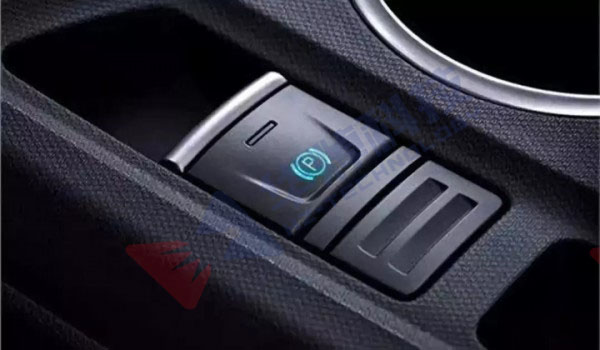
The laser welding of the plastic parts of the EPB electronic parking system mainly involves the laser welding of the EPB electronic parking controller shell and the plastic shell of the EPB electronic parking MGU parts.
on the structural design
The design of the EPB controller and the MGU component shell adopts the design structure of quasi-synchronous welding. The bottom shell is designed with welding ribs. The laser spot scans quickly along the welding ribs, and the whole welding ribs are melted to form a bed to complete the welding. The advantage of the quasi-synchronous laser plastic welding process is that, on the one hand, it can compensate the deformation of plastic parts by the collapse of the welding rib; on the other hand, it can be used as one of the standards for quality monitoring by monitoring the collapse of the welding rib.
The main difficulty of laser welding of EPB electronic parking system plastic parts is concentrated in the process, and the laser welding of the materials used is the main difficulty. Traditionally, the EPB controller and MGU component shells are made of PBT materials. Common PBT materials have poor laser penetration performance, such as BASF's B4300 G6 LT material; specially developed laser high-penetration PBT materials are too expensive, such as BASF's LUX series is generally not purchased by auto parts manufacturers. At present, domestic engineering plastics suppliers are also actively developing PBT materials for plastic laser welding. The more well-known ones, such as the ECOT series PBT materials developed by Ningbo Youketai, have a penetration rate of about 50% (~1.5mm thickness). At the same time, injection molding is not affected by mold temperature, and the processing window is wide, which is more suitable for national conditions. Recently, some customers have also begun to test the PBT laser penetrating material specially developed by Mitsubishi for EPB, and its penetration rate has reached an astonishing 50% (~1.5mm thickness). Achieve more than double the rapid production.
BASF's PBT materials have strict process requirements for injection molding, and the unqualified injection molding parts will seriously affect the quality of the final plastic laser welded products. One of the most important is the laser penetration rate of the upper cover of the EPB shell. The penetration rate must be kept above a certain level and uniform. The penetration testing equipment used by general injection molding suppliers has great limitations. Almost all of these suppliers select points on the sample to test the laser penetration rate of the laser penetrating parts. Using this method can only roughly know the laser penetration of the penetrating part, but cannot fully know the laser penetration rate of the entire welding surface of the penetrating part and the stability of the penetration rate. The local penetration rate difference as shown in the figure below is likely to be undetectable by penetration rate testing instruments.
In addition to the troublesome laser penetration rate of PBT materials, the narrow process window of PBT materials during the welding process also brings a lot of trouble to EPB and MGU shell manufacturers. In the PBT laser welding process, if the laser power is too large, the PBT material will easily leave traces or burn spots on the welding surface, affecting the appearance of the product.
2021.08.02
2021.07.01
2021.07.03
2021.07.17
2021.07.03
2021.07.17
2021.07.17
2021.07.17

 Official WeChat
 The public