
National sales hotline:0757-22320581

Time:2021-07-17
Read volume:1042
Share:
As a technology for welding plastic products, laser welding is mainly used to connect sensitive plastic products, such as circuit boards, electronic sensors of plastic parts, plastic products with complex shapes, and plastic products that require strict sealing and cleanliness such as medical equipment. .
Principle of laser welding
When using laser welding technology to weld two plastic parts, the parts need to be clamped together first, and then the near-infrared laser with a wavelength of 810 ~ 1064 nm is transmitted through the first part, and the laser is absorbed by the second part after transmission. The absorbed near-infrared laser is converted into thermal energy, which melts the contact surfaces of the two parts to form a weld zone. The laser welding process can produce welds that exceed the strength of the raw material.
Common welding methods for plastic laser welding
In practical applications, there are several different welding process methods for plastic laser welding.
Sequential contour welding, the laser moves along the contour of the plastic welding layer and melts it, and the plastic layers are gradually bonded together; or the sandwiched layer is moved along a fixed laser beam to achieve the purpose of welding.
Simultaneous welding, laser beams from multiple diode lasers, shaped by optical elements, laser beams are directed along the contour of the weld layer, while generating heat at the weld, causing the entire contour to melt and bonded together.
Scanning welding, also known as quasi-simultaneous welding, scanning welding technology combines the above two welding technologies of sequential circumferential welding and synchronous welding. Using a mirror to generate a high-speed laser beam with a speed of 10 m/s, it moves along the part to be welded, so that the entire welding part gradually heats up and fuses together.

Irradiation mask welding, the laser beam is positioned through the template, melts and bonds the plastic, the template only exposes a small and precise welding part on the underlying plastic layer, and the laser beam only targets the part of the product that is not covered by the mask heating. High-precision soldering down to 10 microns can be achieved using this technique.
Advantages of plastic laser welding
The advantages of laser welding applied to the fusion of plastic parts include: precision welding, strong and tight sealing, air and water tightness, less resin degradation and less debris generated during welding, and the surface of the product can be tightly joined together around the weld. The advantage of laser welding without residue makes it more suitable for pharmaceutical products and electronic sensors controlled by the State Food and Drug Administration.
Easy to control, it can weld workpieces with small size or complex shape and structure. Because the laser is easy to be controlled by computer software, and the output of the fiber laser can flexibly reach every minute part of the part, the use of laser welding can weld areas that are not easy to reach by other welding methods, and weld products with complex shapes and even three-dimensional geometric shapes.
Compared with other welding methods, laser welding greatly reduces the vibration stress and thermal stress of the product. This means that the product or the internal components of the device will age more slowly and can be applied to fragile products. Capable of welding many kinds of different materials. For example, it is possible to join polycarbonate, glass fiber reinforced black polybutylene terephthalate, which transmits near-infrared lasers. such different polymers are linked together.
Plastic Laser Welding Applications
Laser welding is a vibration-free welding technology, so it is especially suitable for precision-machined electronic components such as mice, mobile phones, connectors, and those complex parts that need to be welded in a cleaner way, such as those containing circuit boards. Plastic products, medical equipment, etc.
In the automotive industry, laser-welded plastic technology can be used to manufacture many auto parts, such as automatic door locks, keyless entry and exit devices, fuel nozzles, shift racks, engine sensors, cab racks, hydraulic tanks, filter mounts, front lights and taillights, etc. Other automotive applications include the manufacture of intake manifold light manifolds and auxiliary water pumps.

In the medical field, laser welding technology can be used to manufacture fluid reservoirs, fluid filtration devices, hose connectors, ostomy bags, hearing aids, implants, microfluidic devices for analysis, and more.
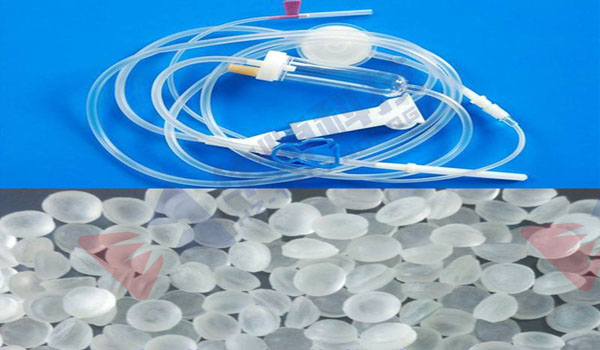
The laser can also weld plastic films together, which moves along the edges of the films to form a packaging seal structure through bonding. The operation process can be completed very quickly.
New Material Activates Laser Welding Applications
Studies have shown that the transmittance of polymers to near-infrared lasers is at least 20-50%, and laser welding technology can be used to obtain excellent welding results. Most natural plastics and many colored translucent plastics can meet this light transmittance requirement. In other words, laser welding can be applied to most plastics.
On the other hand, the absorption rate of plastic to near-infrared laser is also an important factor affecting the effect of laser welding. Most thermoplastics can greatly improve their laser absorptivity by adding an appropriate amount of carbon black, but for some materials, the application of laser welding still has certain limitations. For example, if both materials are transparent or white, near-infrared laser light can be transmitted through, resulting in extremely low absorption of near-infrared laser light by the material. In this case, laser welding cannot be used. Another typical example is PPS and LCP plastics. The transmittance of the two materials to the near-infrared laser is very low. If the two materials are filled with carbon black at the same time, the laser cannot penetrate and cannot be laser welded. In addition, many mineral-filled compounds are not suitable for laser welding. In order to overcome these limitations of laser welding, some plastic manufacturers are actively researching and developing new materials that help to improve laser transmittance and absorption, and have achieved gratifying results. The progress of laser welding technology brings broader application prospects.

 Official WeChat
 The public